
Chinese Scholars Make New Progress in the Study of East Asian Homo erectus Evolution
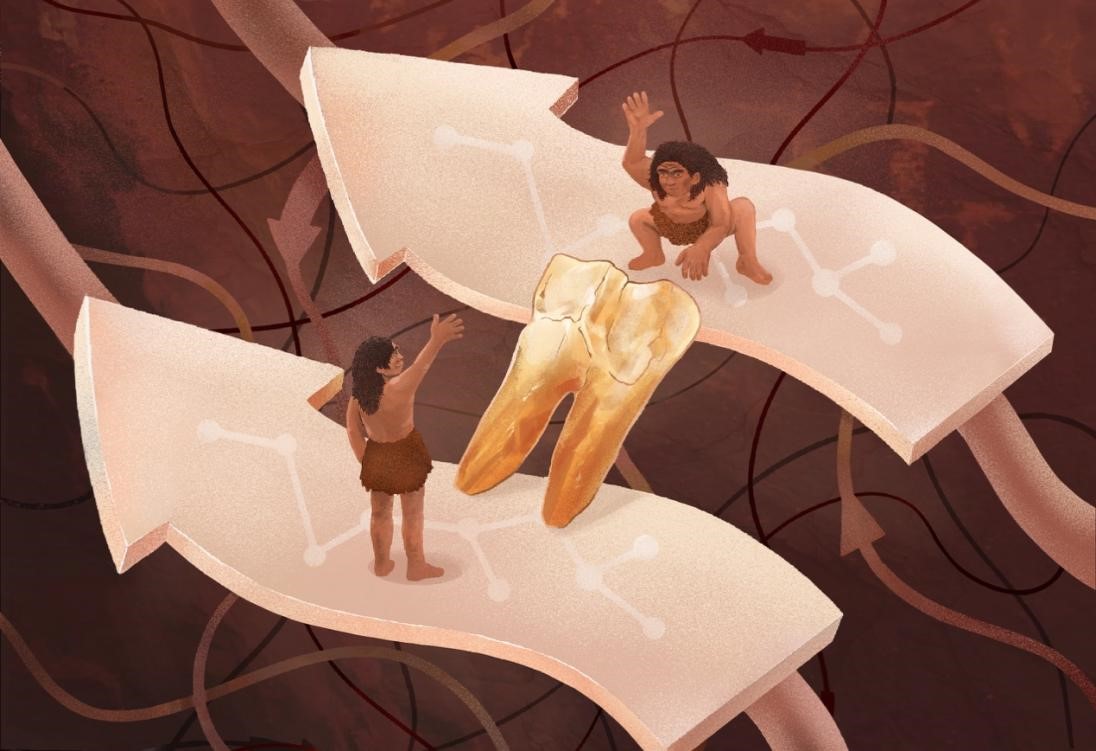
Figure 1: Enamel proteins establish links among Homo erectus individuals
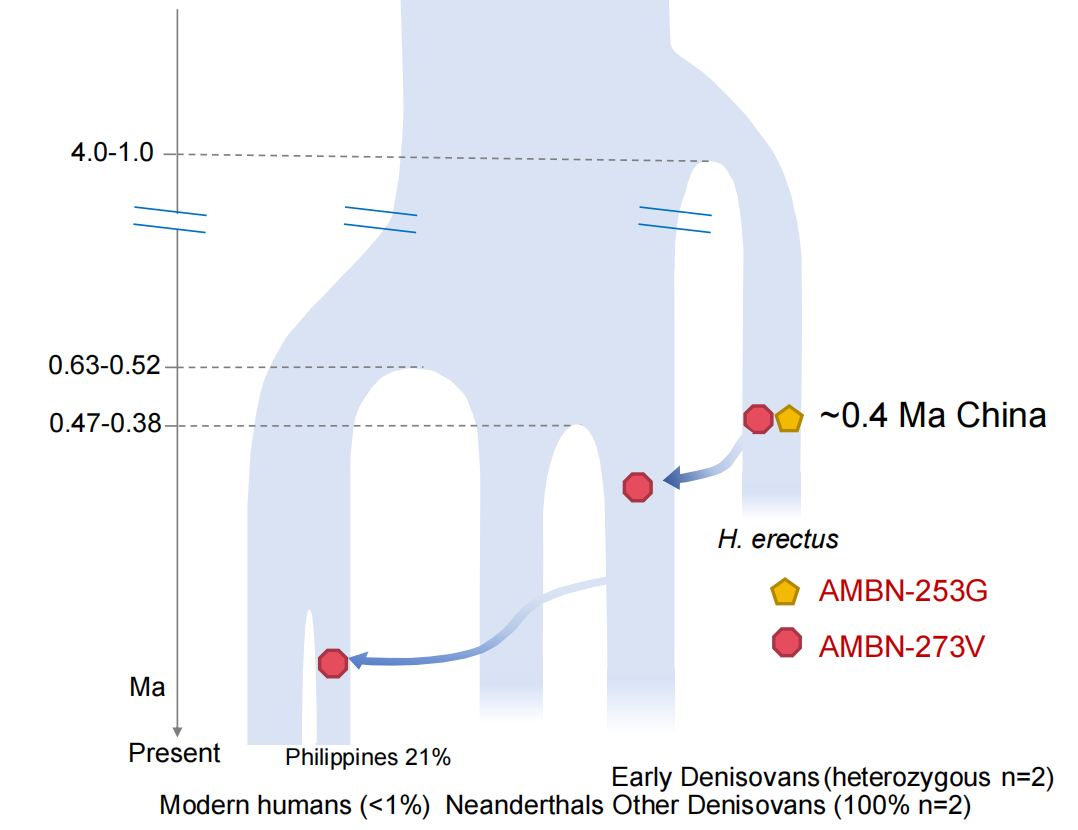
Figure 2: A possible gene flow model inferred from the amino acid mutation site AMBN-M273V
Homo erectus was the first species within the genus Homo to migrate out of Africa and disperse widely across Eurasia and Southeast Asia, occupying a key position in human evolutionary history. Fossils from East Asia, dating from 2.1 million to 300,000 years ago, are key to reconstructing the evolutionary history of East Asian Homo erectus. However, their great antiquity and the destructive nature of traditional sampling methods have long hindered paleogenetic research on these precious specimens, leaving a series of critical scientific questions about human evolution unresolved for decades, e.g. whether East Asian Homo erectus evolved independently, and whether there existed genetic connection among East Asian Homo erectus, Denisovans, and certain modern human populations.
Supported by the National Natural Science Foundation of China (Grant No. L2424324), Professor Fu Qiaomei's research team at the Institute of Vertebrate Paleontology and Paleoanthropology, Chinese Academy of Sciences, has achieved a breakthrough in studying East Asian Homo erectus evolution, which clarifies a key question in human evolution: “Is Homo erectus related to modern humans?” (Figure 1). The findings were published online in Nature on May 13, 2026, under the title “Enamel proteins from six Homo erectus specimens across China”. Article link: https://www.nature.com/articles/s41586-026-10478-8.
The team proposed an innovative “micro-destructive sampling approach based on acid etching”—a nearly non-destructive assessment and sampling protocol. Without compromising the morphological integrity of the fossils, they successfully retrieved, for the first time, phylogenetically informative enamel proteomes from six Middle Pleistocene Homo erectus teeth, dating to at least 400,000 years ago, at three sites (Figure 2): Zhoukoudian (Beijing), Hexian (Anhui), and Sunjiadong (Henan). Analytical results showed that the Homo erectus individuals from Zhoukoudian, Hexian, and Sunjiadong were genetically highly similar to one another and distinct from Neanderthals, known Denisovans, and modern humans.
This discovery provides the first molecular evidence that Homo erectus from these three sites belonged to a single, independent evolutionary lineage, resolving long-standing debates over the intraspecific classification of East Asian Homo erectus and filling a critical gap in knowledge of their genetic characteristics.
Moreover, the study reveals, for the first time, that segments of the Denisovan genome introgressed into modern humans can be traced to Middle Pleistocene hominin populations—specifically, it identifies a deep genetic connection among East Asian Homo erectus (such as those from Zhoukoudian), Denisovans, and certain present-day human populations (Figure 2). This provides important evidence for understanding the complexity of hominin evolution and gene flow networks within the genus Homo.
This represents the first lineage-specific molecular information from Homo erectus fossils, constituting the oldest hominin proteome ever recovered in East Asia. It extends the timeline of East Asian hominin proteomics from approximately 160,000 years ago to at least 400,000 years ago and transforms Homo erectus from a morphologically defined taxon into an evolutionary taxon with verifiable genetic contributions. The innovative methodological framework proposed in this study provides a reference for exploring even older hominin groups and establishes ancient proteomics as a key line of evidence for unraveling human evolutionary history—elevating it from an auxiliary tool to a core approach for deciphering the human evolutionary past.
Contact Us

National Natural Science Foundation of China
Add: 83 Shuangqing Rd., Haidian District, Beijing, China
Postcode: 100085
Tel: 86-10-62327001
Fax: 86-10-62327004
E-mail: bic@nsfc.gov.cn