
Chinese Scientists Make Breakthrough in Understanding Tumor Immune Evasion
Supported by the National Natural Science Foundation of China (Grant No. 32270968) and other funding sources, Professor Ting Zhou’s research team at Westlake University has made significant advances in uncovering mechanisms of tumor immune evasion. Their latest study, titled "Rescuing dendritic cell interstitial motility sustains antitumour immunity", was published online in Nature on June 25, 2025. Link to article: https://www.nature.com/articles/s41586-025-09202-9#Sec10.
Dendritic cells (DCs) are professional antigen-presenting cells that play a pivotal role in initiating and sustaining anti-tumor immunity. For effective antitumor immunity, DCs must migrate from the tumor site to the tumor-draining lymph nodes (tdLNs) to present tumor antigens and activate tumor-specific T cell responses. However, as tumors progress, signals within the tumor microenvironment increasingly disrupt this migratory, weakening anti-tumor immunity. The underlying mechanisms causing immune escape remain poorly understood.
To address this gap, Prof. Zhou’s team developed an innovative genome-wide in vivo CRISPR screening platform specifically targeting dendritic cells. The unique aspect of this screen was its use of successful migration of DCs from tumors to tdLNs as the functional readout. This approach enabled the identification of key negative regulatory genes that impair DCs migration, revealing new insights into how the tumor microenvironment suppresses DCs mobility and thereby facilitates immune evasion. The researchers identified the Pde5–cGMP signaling axis as a crucial regulator of interstitial DCs motility. Tumor progression was shown to impair cGMP production, which in turn reduced DCs migration efficiency (Figure 1). Remarkably, the PDE5 inhibitor sildenafil—a FDA approved drug—was able to restore DCs migration and reinvigorate T cell-mediated anti-tumor immunity.
This study uncovers a novel mechanism of tumor immune evasion through the inhibition of DCs interstitial motility and highlights a promising therapeutic strategy that restores DCs migration to sustain anti-tumor immunity. These findings provide valuable mechanistic insight and open new avenues for enhancing the efficacy of cancer immunotherapies.
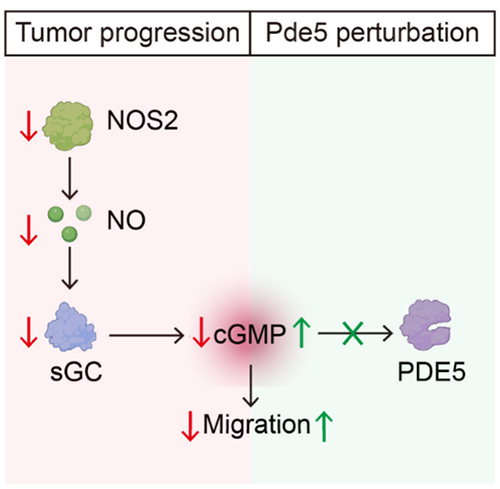
Figure 1. Pde5-cGMP as key signal pathway in regulating DC interstitial motility
Contact Us

National Natural Science Foundation of China
Add: 83 Shuangqing Rd., Haidian District, Beijing, China
Postcode: 100085
Tel: 86-10-62327001
Fax: 86-10-62327004
E-mail: bic@nsfc.gov.cn