
Chinese Scientists Make Progress in Pathogenic Protein Clearance Mechanisms and Original Degradation Technology for Neurodegenerative Diseases

Figure 1. Chinese scientists have established the first targeted protein degradation technology based on the Endoplasmic Reticulum-Associated Degradation (ERAD) pathway. This technology utilizes small-molecule compounds to achieve efficient targeted degradation of transmembrane proteins at pM-nM concentrations, providing a new avenue for the development of oral therapeutics for major diseases such as neurodegenerative disorders and cancer. The diagram provides an artistic interpretation of the ERADEC mechanism: the landscape and architecture on the right symbolize the cell; the central ink-wash represents the endoplasmic reticulum (ER); and the "magical brush" (ERAD), induced by the targeted degradation molecule (ERAD-engaging Chimera, ERADEC, shown as the luminous point within the ink wash), selectively degrades pathogenic proteins via the ER-associated degradation pathway, thereby resisting disease (symbolized by the vessel on the left).
Can cells function as their own " self-cleaning" capability to precisely eliminate pathogenic transmembrane proteins, thereby curbing diseases at their root? This vision is now becoming a reality through an original breakthrough by Chinese scientists. Supported by the National Natural Science Foundation of China (Grant Nos. 82525103, 82450901, 82394422, 82030105, and 82330109), the research team has achieved a major breakthrough in the field of targeted protein degradation (TPD). They have designed a class of chimeric small-molecule compounds named ERADEC, which, by “hijacking” ER-localized ubiquitin ligases, precisely bind to and degrade disease-causing membrane proteins—especially those “stubborn molecules” that were previously resistant to conventional drugs.
The breakthrough in this research lies in its first systematic "hijacking" of the cell's own ERAD machinery to "combat" pathogenic proteins. This original system has simultaneously overcome two long-standing technical bottlenecks: first, it systematically utilizes the cell's endogenous ERAD mechanism to degrade target proteins, rendering previously "unclearable" targets on the cell membrane accessible; second, it bypasses the traditional requirement for specific "druggable binding pockets" on the target, significantly expanding the scope of targetable disease proteins. This achievement represents an original breakthrough by Chinese scientists in the frontier fields of protein homeostasis regulation and targeted degradation, holding significant implications for mechanistic research and the development of novel oral drugs for major diseases like neurodegenerative disorders and cancer.
A key pathological foundation of neurodegenerative diseases such as Huntington's disease is the continuous accumulation of pathogenic mutant proteins in neurons. However, these proteins often lack structural sites that can be "captured" by traditional drugs, long being regarded as "undruggable" targets with very limited intervention options. A collaborative team led by Professor Boxun Lu of the School of Life Sciences, Fudan University, and Professor Chunquan Sheng of the Naval Medical University leveraged the cell's intrinsic "quality control mechanism"—the Endoplasmic Reticulum-Associated Degradation (ERAD) system—to achieve a "redirection" of the internal degradation machinery. This allows for the recognition and processing of pathogenic proteins that would otherwise remain stable, effectively controlling their levels and resisting disease (Figure 1). These findings, titled "Hijacking ER-associated degradation (ERAD) for targeted degradation of transmembrane proteins," were published online in Cell on March 19, 2026. The paper is available at: https://www.cell.com/cell/abstract/S0092-8674(26)00105-4.
The research began with the functional and mechanistic elucidation of a small molecule, desonide. Preliminary studies by the team demonstrated that desonide could suppress the toxicity of mutant huntingtin (mHTT)—the key pathogenic protein in Huntington's disease—though the precise mechanism remained elusive. To elucidate the underlying scientific mechanism, the collaborative team discovered that desonide does not merely inhibit mHTT function directly. Instead, it serves as a "molecular bridge" that binds to the intracellular, ER-localized E3 ubiquitin ligase SYVN1. Acting as a "molecular glue," it enhances the association between the pathogenic protein and SYVN1, thereby "tagging" the protein for ubiquitination and channeling it into the cellular degradation machinery (Figure 2).
Based on these mechanistic insights, the team cleverly exploited the fact that transmembrane proteins enter the ER for folding during synthesis, where they are typically inaccessible to cytosolic degradation systems. They proposed and established a novel strategy to "hijack" ERAD—the ERAD-engaging Chimera (ERADEC) degradation system. By designing bifunctional small molecules—with one end recognizing the target protein and the other recruiting the ER-resident degradation tag protein SYVN1—the target protein is actively "introduced" into the ERAD pathway for selective degradation. Unlike previous strategies that primarily rely on cytosolic degradation, this method utilizes the ER's own degradation machinery specifically for the targeted degradation of transmembrane proteins.
The research team further validated their model using PD-L1, a key target in cancer immunotherapy. They found that ERADEC achieves effective degradation of this transmembrane protein at low concentrations (pM-nM range), confirming that "hijacking" ERAD—a classic mechanism for degrading misfolded proteins—via small-molecule compounds can achieve specific degradation of transmembrane proteins to effectively inhibit tumor growth. Notably, its anti-tumor efficacy outperformed the PD-L1 antibody blockade strategies widely used in clinical practice (Figure 2). Compared to traditional antibody drugs requiring intravenous injection, these small-molecule degraders offer distinct advantages, including recyclability, lower effective dosages, and reduced costs, and are expected to drive cancer immunotherapy into a new era of oral administration. This study not only provides a viable technical methodology but also proposes a new drug discovery paradigm: compared to traditional protein function inhibition, direct induction of pathogenic protein degradation may demonstrate significantly greater therapeutic potential.
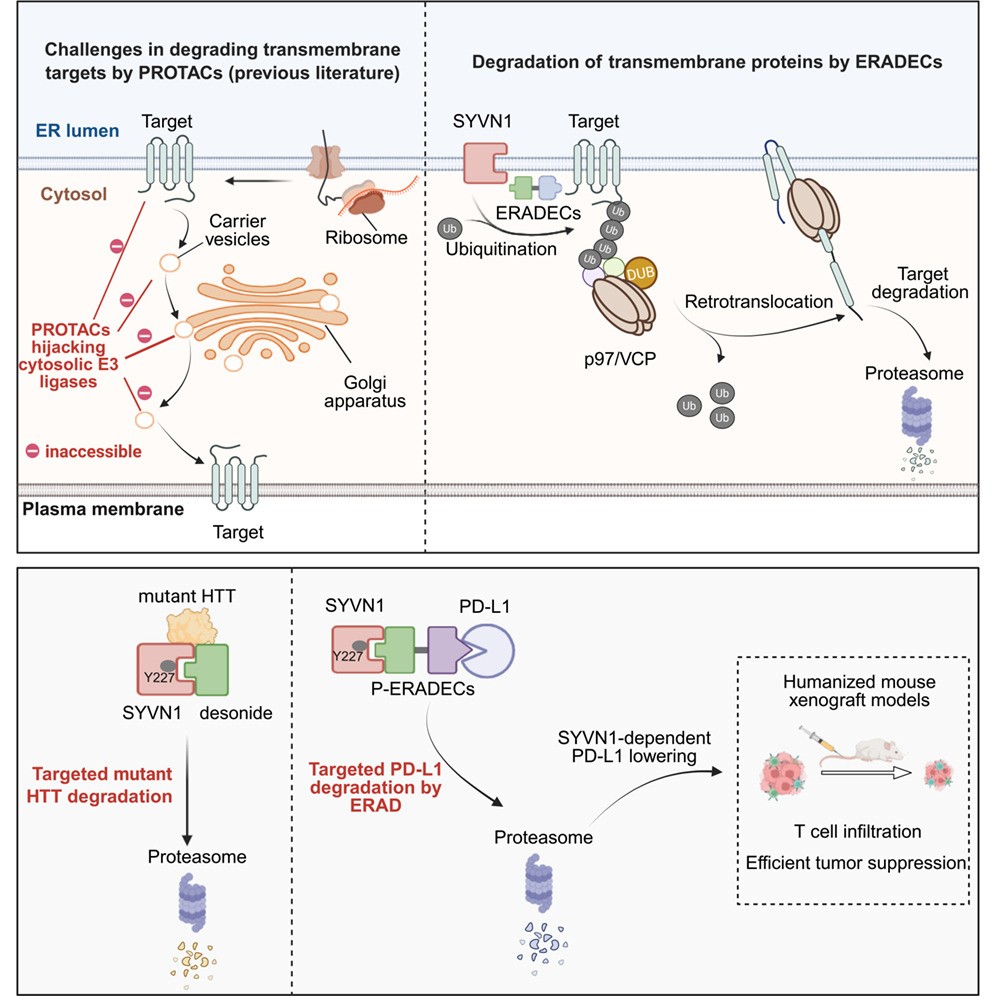
Figure 2. Construction and Intervention Application of the ERADEC Targeted Protein Degradation Technology.
The success of this research benefited from long-term and stable funding mechanisms, including the Young Scientists Fund (Category A continued support) and the Original Exploration Program (continued support) of the National Natural Science Foundation of China. Furthermore, this achievement is a testament to the profound synergy within the interdisciplinary research team, fully exemplifying the strengths of a research paradigm centered on tackling key challenges through collaborative innovation. From the initial discovery of the phenomenon to the elucidation of the mechanism, and further to the construction of the technological system, the entire research process exemplifies the characteristic of basic research in continuously nurturing breakthroughs through long-term accumulation.
Contact Us

National Natural Science Foundation of China
Add: 83 Shuangqing Rd., Haidian District, Beijing, China
Postcode: 100085
Tel: 86-10-62327001
Fax: 86-10-62327004
E-mail: bic@nsfc.gov.cn