The 457th Shuangqing Forum on “Innovation and Civilization: How to Turn Intellectual Progress into Human Prosperity and Well-being” Held in Beijing
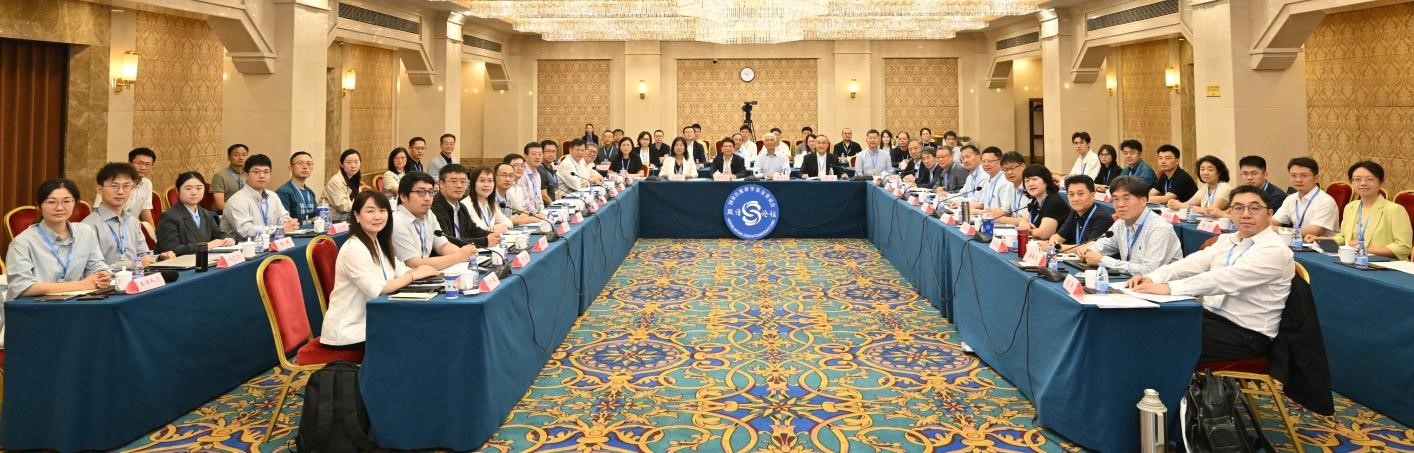
The 457th Shuangqing Forum of the National Natural Science Foundation of China (NSFC), themed “Innovation and Civilization: How to Turn Intellectual Progress into Human Prosperity and Well-being”, was held in Beijing on September 9, 2026.
The forum was jointly organized by the NSFC’s Bureau of International Cooperation, Department of Interdisciplinary Sciences, Department of Earth Sciences, Department of International Programs, and Bureau of Planning and Policy, and hosted by Peking University. Chen Deliang from Tsinghua University, Zhang Tao from Dalian Institute of Chemical Physics (Chinese Academy of Sciences) and Piao Shilong from Peking University served as forum chairs. At the opening ceremony, Lan Yujie, Vice President of the NSFC; Duan Huiling, Vice President of Peking University; and Chen Deliang delivered remarks and Li Wencong, Deputy Director General of the Bureau of International Cooperation moderated the ceremony.
During his remarks, Lan Yujie noted that the forum was organized to facilitate forward-looking discussions on scientific and technological innovation and sustainable development, aiming to provide intellectual support for strategic research. He emphasized the importance of focusing on frontier fields such as artificial intelligence and quantum science and technology to assess emerging trends in science and technology and their implications for economic and social development, and to promote new breakthroughs in key areas. He expressed the hope that participating experts would engage in open discussions and exchanges on scientific innovation, and offer pertinent suggestions for addressing global challenges, enhancing human well-being, and building a community with a shared future for humanity.
In her opening remarks, Duan Huiling extended her congratulations on the opening of the forum and expressed her appreciation to the NSFC and participating experts for their longstanding support for Peking University. She noted that Peking University has been committed to high-level free exploration, high-quality organized research, and efficient translation of scientific and technological achievements, generating a series of valuable original results in response to major national strategic needs. She pointed out that the world faces a range of complex and interconnected sustainable development challenges that require scientific and technological innovation to deliver both technological breakthroughs and meaningful social impact. Peking University will take this forum as an opportunity to further strengthen international exchange and cooperation to help ensure that scientific and technological advances deliver greater benefits for humanity.
Chen Deliang opens his remark with the evolution of human civilization during the Great Acceleration, emphasized that a stable climate is fundamental to the survival and continued development of civilization. To address shared global challenges such as climate change, he called for stronger scientific research, deeper international cooperation, and more effective global governance, as well as greater efforts to translate scientific and technological innovation into concrete action. John Schellnhuber, Director General of the International Institute for Applied Systems Analysis (IIASA), joined the forum online. He commended China’s proactive initiatives and practical efforts in sustainable development and ecological civilization, and expressed his hope that participating scientists’ discussion on four major themes, including innovation, empowerment, transformation, and governance, would promote multilateral scientific and technological cooperation and turn scientific knowledge and insights into concerted global action.
Fan Yingjie, Director General of the NSFC’s Bureau of International Cooperation, introduced the background, major topics, and expected goals of the 2027 Nobel Laureate Summit, further clarifying the forum’s role as a preparatory research activity and the opinions and suggestions generated at the forum will provide reference for the 2027 Summit. Participating experts held in-depth discussions on four topics: disruptive technologies empowering sustainable development, scientific research innovation and policy coordination, institutional and economic conditions guiding innovation, and multilateral cooperation and global governance. The discussions identified frontier directions and key scientific questions in the field of sustainable development, charted a course of action for better advancing the Thought on Ecological Civilization and effectively supporting the strategic needs of global governance. The forum also provided valuable support for the preparation of the 2027 Summit, including its theme, proposed speakers, format, and expected outcomes.
Thirty experts and scholars from universities, research institutes, and enterprises across China, three principal investigators leading Basic Research Projects for Young Students, and relevant NSFC staff attended the forum.
Contact Us
National Natural Science Foundation of China
Add: 83 Shuangqing Rd., Haidian District, Beijing, China
Postcode: 100085
Tel: 86-10-62327001
Fax: 86-10-62327004
E-mail: bic@nsfc.gov.cn